Recycling and Sustainability for Commercial Waste Plaistow
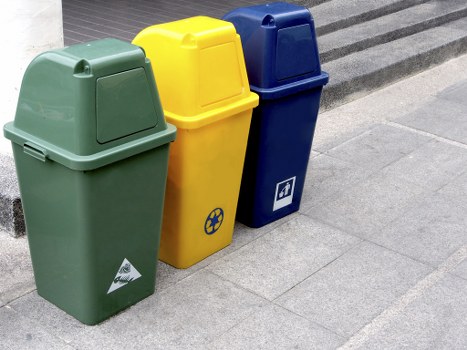 Welcome to our overview of recycling and sustainability for Commercial Waste Plaistow. In an increasingly urban environment, establishing an eco-friendly waste disposal area and a practical sustainable rubbish area is vital for local businesses. This page explains how Plaistow commercial waste services are aligned with borough priorities, and how commercial operators can integrate more circular practices. We emphasise measurable targets, collaborative reuse, and low-carbon transport as core pillars of a greener commercial waste strategy.
Our practical target for commercial recycling is clear: we are working to achieve a 60% recycling rate for commercial waste by 2030. This recycling percentage target is ambitious but realistic when supported by improved segregation, reuse and recovery routes. Achieving this target relies on clear reporting, regular audits of mixed streams, and ongoing business engagement. Tracking tonnage by stream - paper, cardboard, metals, glass, food and mixed dry recycling - enables local operators to see progress and appoint corrective actions when needed.
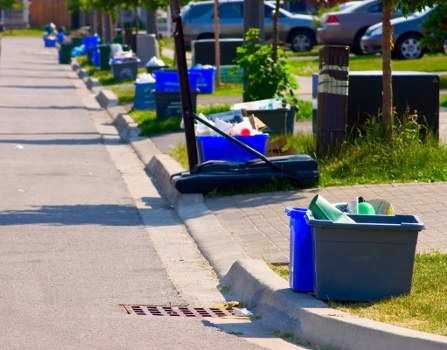 The borough's approach to waste separation underpins success: Plaistow follows a model that encourages separation of food waste, glass, paper, and mixed recyclables at source. For commercial units this means dedicated containers for organics and dry recycling, and practical on-site signage to reduce contamination. Light recycling activities common in the area include paper and card baling from retail units, glass collection from hospitality venues, and food waste captures feeding anaerobic digestion systems. Commercial waste in Plaistow benefits from consistent separation policies that mirror household collection logic, making transfer to recovery facilities more efficient.
Local Transfer Stations and Resource Recovery
To keep the flow from collection to recovery efficient, we partner with several local transfer stations and material processing facilities. Using nearby transfer hubs reduces vehicle mileage and turnaround time, helping to make the eco-friendly waste disposal area concept operational. Benefits include:
- Faster consolidation of mixed commercial loads for onward delivery to Materials Recovery Facilities (MRFs)
- Lower empty-run mileage through optimized routing and local drop-off points
- Improved segregation capacity via on-site sorting at transfer stations
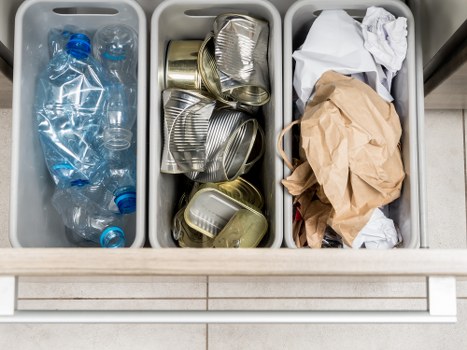 Partnerships with charities and social enterprises are central to our sustainability model. Textile reuse charities, food redistribution networks and furniture reuse organisations are valuable partners: they divert usable goods from the waste stream, provide household-level benefits, and reduce the embodied carbon of new purchases. For businesses, donating surplus stock or gently used fixtures to verified charities not only supports the community but also contributes to the overall recycling percentage target.
Beyond donations, we actively promote collaboration with local reuse centres and circular procurement projects. These relationships enable Plaistow businesses to coordinate pickups for bulky items and electricals destined for refurbishment. Plaistow commercial waste arrangements increasingly favour reuse-first principles, with charities providing collection, testing and redistribution services that often sit outside traditional municipal routes.
Low-Carbon Vans, Fleet Efficiency and Emissions Reduction
Our collection fleet is being transformed to reduce carbon emissions and local air pollution. A growing proportion of vehicles used for commercial collections are low-carbon vans, including electric and plug-in hybrids, complemented by efficient route planning software. These measures cut emissions on inner-city runs and help maintain the sustainability credentials of a dedicated sustainable rubbish area. Fleet upgrades have immediate air-quality benefits for Plaistow and reduce the lifetime carbon footprint of each tonne collected.
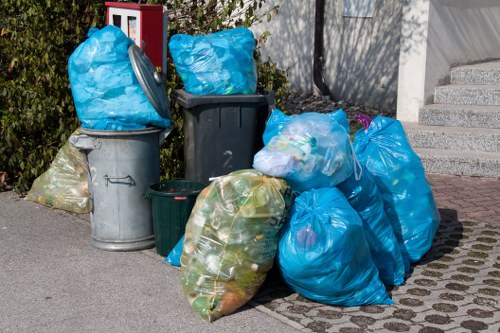 Operational measures complement vehicle upgrades. Driver training on eco-driving, scheduled consolidated collections for densely packed commercial streets, and the use of local transfer stations all lower fuel use. We also employ real-time load management so that low-emission vans operate at optimum capacity, preventing unnecessary trips and aligning with the recycling percentage target. Commercial waste in Plaistow is therefore managed with both efficiency and climate priorities in mind.
 To support long-term sustainability we promote waste prevention and circular economy principles: procurement guidance that favours repairable goods, on-site segregation to reduce contamination, and contracts that incentivise reuse. Regular compliance checks, transparent tonnage reporting and training help businesses meet both legal obligations and voluntary sustainability goals. Together, these steps help Plaistow businesses transform their waste handling into visible climate action while contributing to an effective and resilient eco-friendly waste disposal area.
The combination of a firm recycling percentage target, local transfer station networks, active charity partnerships and a low-carbon collection fleet creates a robust framework for managing Plaistow's commercial refuse. Commercial Waste Plaistow initiatives are designed to be practical, measurable and community-minded, delivering a sustainable rubbish area that benefits businesses, residents and the environment. As we iterate and scale successful pilots, the focus remains on maximising reuse, minimising residual waste and reporting progress transparently.
By aligning business-level action with borough separation policies and investing in low-emission logistics, Plaistow can deliver on both immediate local air-quality benefits and longer-term carbon reduction commitments. The strategic mix of operational improvements, partnerships with charities for redistribution, and investment in low-carbon vans strengthens the circular economy in the area and increases the share of waste diverted from disposal.
In summary, Plaistow's approach to sustainable commercial waste management balances ambition with practical delivery: a 60% recycling target for commercial streams, supported by transfer hubs, reuse partnerships and a cleaner fleet, helps create a more resilient and eco-friendly waste ecosystem across the neighbourhood.
